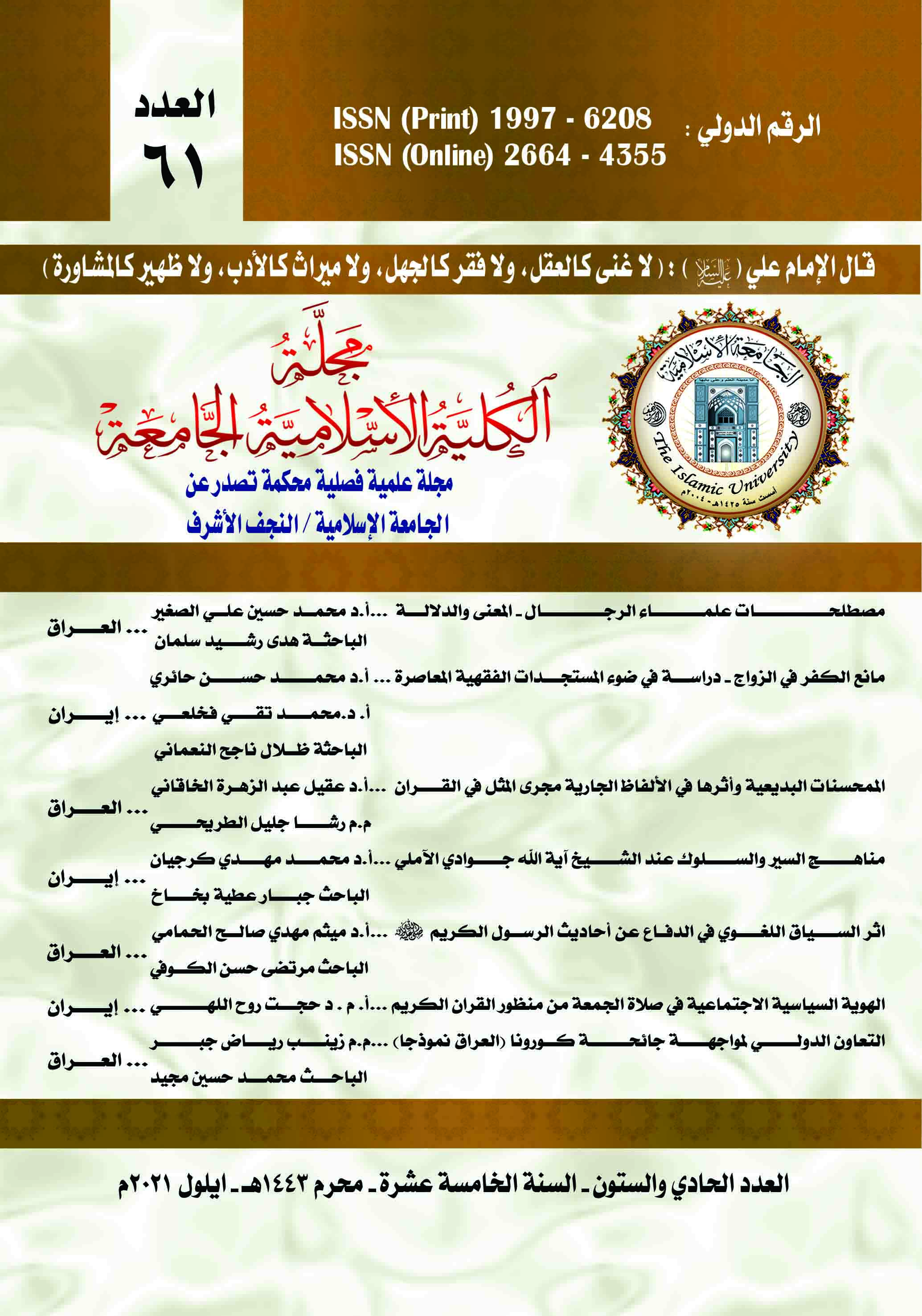
Abstract
Abstract:-
The terms al-jarḥ (accrediting) "accrediting and al-taʻdīl (discrediting) have been arguably contentious issue that scholars majored in the science of narrators (Ilm Al-Rijal) have been facing where those [the terms] were widely debated. The scholars' opinions were often equally similar and often dissimilar, and that is attributed to terms denotations, and what identicality they contain.
The scholars of hadith science and the science of narrators have used utterances related with praising and commendation and discrediting and dispraising, some were clear and some were unclear. Therefore, jurisprudent must know narrator's biography concerning (accrediting) and discrediting) in order to distinguish the authenticity and weakness of any narration , even it requires to dispraise a narrator , bit is provided to prove that where many have wronged or have not done justice to one' self.
This is very important in the search for a narrator's biography, it is regarded as a pillar of biographical evaluation.Any way the explorer in the terms of the science of narrators cannot determine narration's reliability unless employing the correct meaning of each term. Consequently, he would understand the function of those terms mistakenly. It is fundamentally required to examine biographical evaluation's terms. That will enable researcher to reach a reliable and authenticated hadith by using the terms of this science.
The importance of research in these utterances lies in the fact that the testimony of an creditable one can be one of the ways to prove the narrator biography in terms of his righteousness and others, which helps in evaluating the narrations transmitted by him whether to be accepted or rejected by using a particular utterance For example, reliable, reliable (thiqah thiqah), transmitted by (musnad anhu).
The terms al-jarḥ (accrediting) "accrediting and al-taʻdīl (discrediting) have been arguably contentious issue that scholars majored in the science of narrators (Ilm Al-Rijal) have been facing where those [the terms] were widely debated. The scholars' opinions were often equally similar and often dissimilar, and that is attributed to terms denotations, and what identicality they contain.
The scholars of hadith science and the science of narrators have used utterances related with praising and commendation and discrediting and dispraising, some were clear and some were unclear. Therefore, jurisprudent must know narrator's biography concerning (accrediting) and discrediting) in order to distinguish the authenticity and weakness of any narration , even it requires to dispraise a narrator , bit is provided to prove that where many have wronged or have not done justice to one' self.
This is very important in the search for a narrator's biography, it is regarded as a pillar of biographical evaluation.Any way the explorer in the terms of the science of narrators cannot determine narration's reliability unless employing the correct meaning of each term. Consequently, he would understand the function of those terms mistakenly. It is fundamentally required to examine biographical evaluation's terms. That will enable researcher to reach a reliable and authenticated hadith by using the terms of this science.
The importance of research in these utterances lies in the fact that the testimony of an creditable one can be one of the ways to prove the narrator biography in terms of his righteousness and others, which helps in evaluating the narrations transmitted by him whether to be accepted or rejected by using a particular utterance For example, reliable, reliable (thiqah thiqah), transmitted by (musnad anhu).
Keywords
Al-Sayed Al-Khoo`y.
Asking mercy for the dead
Asking please for people
documentation
Hagiography
Mohammed Ridh Al-Sistany
narration
semantics
The weaks
Validity and invalidity
Abstract
الملخص:-
شغلت الفاظ الجرح والتعديل جدلية كبيرة عند الرجاليين بين الاخذ والرد, والاتفاق والافتراق, وذلك بسبب دلالة المصطلحات, وما يعتريها من تطابق وتضمن خصوصا ما يدور مدار الالفاظ.
حيث اصطلح علماء الحديث والرجال على ألفاظ في التزكية والمدح, وألفاظ في الجرح والذم, بعضها صريح والآخر غير صريح, فمن الواجب على الفقيه معرفة الرجال في الجرح والتعديل ونحوها, ليميز صحيح الحديث من ضعيفه, وإن اشتمل على القدح في المسلم المستور, ولكن يجب التثبت فقد أخطأ فيه كثير.
ان هذا الأمر بالغ الأهمية في بحث الرجال, بل هو وتد الاستنباط الرجالي, إذ ان المتتبع للمفردة الرجالية, لا يمكنه أن يقف على واقع حالها إلا عبر ألفاظ الجرح والتعديل, التي ذكرها متقدمو هذا الفن, وإلا اشتبه عليه الأمر فيحسب ما هو تعديل جرحا وبالعكس, وعليه فلابد من التدقيق في معاني الألفاظ المصطلحة عند الرجاليين, كي يصل الباحث إلى الرواية الواضحة الصحيحة عن المفردة الرجالية
فان أهمية البحث في هذه الألفاظ تكمن في أن شهادة العدل الواحد هي إحدى الطرق لمعرفة حال الراوي من حيث العدالة وغيرها, مما يفيد في تقويم الرواية قبولا وردا كالفاظ: اسند عنه, ثقة ثقة, او غيرها.
شغلت الفاظ الجرح والتعديل جدلية كبيرة عند الرجاليين بين الاخذ والرد, والاتفاق والافتراق, وذلك بسبب دلالة المصطلحات, وما يعتريها من تطابق وتضمن خصوصا ما يدور مدار الالفاظ.
حيث اصطلح علماء الحديث والرجال على ألفاظ في التزكية والمدح, وألفاظ في الجرح والذم, بعضها صريح والآخر غير صريح, فمن الواجب على الفقيه معرفة الرجال في الجرح والتعديل ونحوها, ليميز صحيح الحديث من ضعيفه, وإن اشتمل على القدح في المسلم المستور, ولكن يجب التثبت فقد أخطأ فيه كثير.
ان هذا الأمر بالغ الأهمية في بحث الرجال, بل هو وتد الاستنباط الرجالي, إذ ان المتتبع للمفردة الرجالية, لا يمكنه أن يقف على واقع حالها إلا عبر ألفاظ الجرح والتعديل, التي ذكرها متقدمو هذا الفن, وإلا اشتبه عليه الأمر فيحسب ما هو تعديل جرحا وبالعكس, وعليه فلابد من التدقيق في معاني الألفاظ المصطلحة عند الرجاليين, كي يصل الباحث إلى الرواية الواضحة الصحيحة عن المفردة الرجالية
فان أهمية البحث في هذه الألفاظ تكمن في أن شهادة العدل الواحد هي إحدى الطرق لمعرفة حال الراوي من حيث العدالة وغيرها, مما يفيد في تقويم الرواية قبولا وردا كالفاظ: اسند عنه, ثقة ثقة, او غيرها.
Keywords
علماء الرجال، الترحم ، محمد رضا السيستاني، الترضي، رواية، الضعفاء، الجرح والتعديل، الدلالة، التوتيق، السيد الخوئي.