Abstract
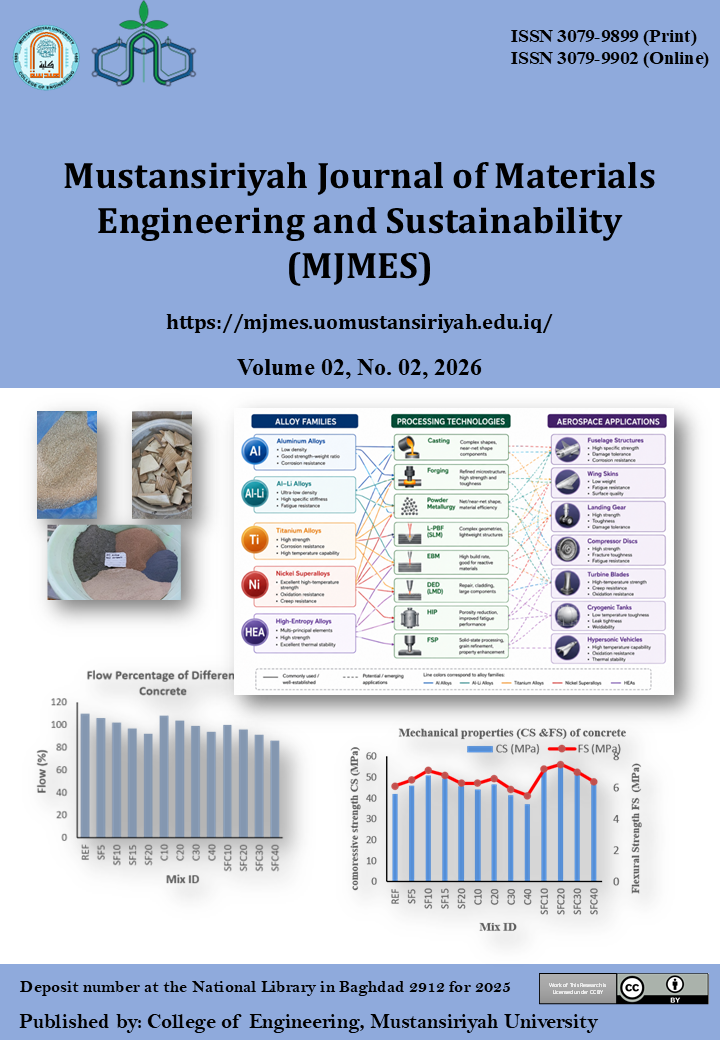
The growing production of industrial by-products and the growing amount of construction and demolition waste have created a range of environmental problems associated with natural resource exhaustion and overburdened landfills. As far as construction and demolition waste is concerned, components such as silica fume and ceramic floor waste have shown some promising features in terms of physical and chemical compatibility with cement-based compositions. The present study focuses on evaluating the effects of using SF as a cement replacement material and CW as a fine aggregate substitute on the performance properties of cement mortar. Altogether, 13 mixes were tested: one control mix, four SF mixes (5%, 10%, 15%, and 20% by weight of cement), four CW mixes (10%, 20%, 30%, and 40% by weight of sand), and four combined SF-CW mixes (10% SF with 10%, 20%, 30%, and 40% CW). Flow tests, setting time determination, compressive strength, flexural strength, and ultrasonic pulse velocity tests were performed, along with scanning electron microscopy. The results showed that the optimal single substitution was 10% SF, reaching a compressive strength of 51.1 MPa, which represents net increase 9 MPa compared to the control specimen (42.1 MPa). The highest compressive (56.1 MPa), flexural (7.5 MPa), and UPV (4.614 km/s) values were observed for the SFC20 composition (10% SF + 20% CW), which indicated a synergetic effect in terms of the density of the material. An increase in both replacements resulted in a decrease in workability.
Keywords
cement mortar
Ceramic Waste
compressive strength
silica fume
sustainable construction
ultrasonic pulse velocity